
After a long stretch of busy days, “feeling balanced” might mean being able to turn your head comfortably, settle your shoulders, or enjoy a quiet hour without rushing. Those are personal goals, and they often explain why someone becomes curious about cupping.
Descriptions of the practice can sound quite different. One practitioner may discuss the movement of Qi; another may talk about suction and the tissues beneath the skin. A third may emphasize the experience of relaxation. Understanding these explanations can help you ask better questions and decide what you want from a session.
Cupping has roots in several traditional medical systems. Its long history provides context, while present-day decisions also call for realistic expectations, attention to safety, and an understanding of what research can tell us.
Where the Language of Flow Comes From
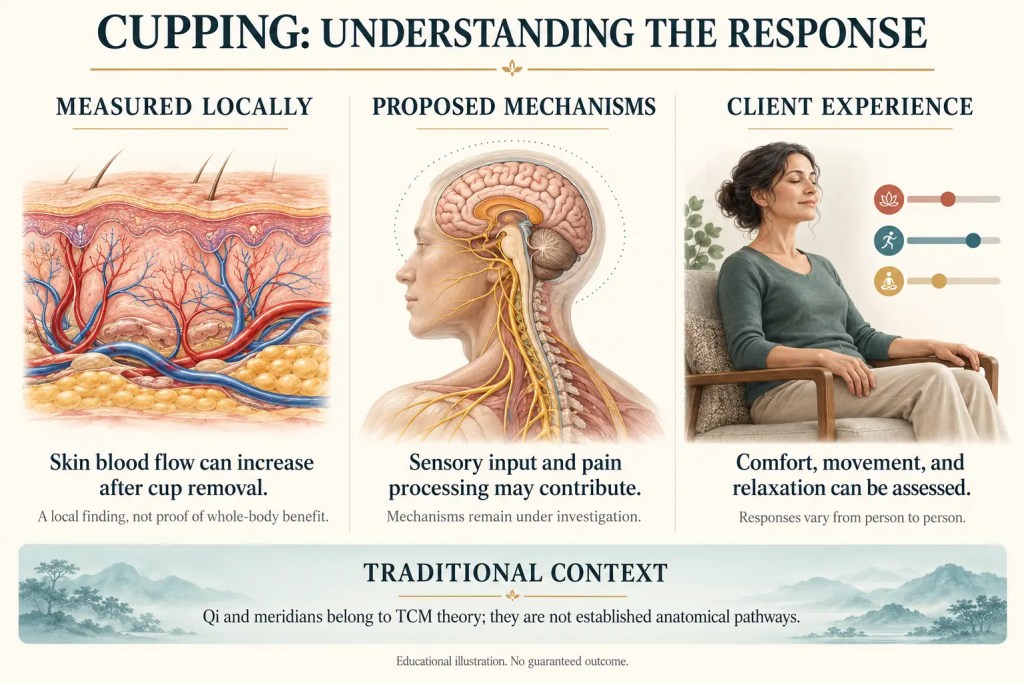
In Traditional Chinese Medicine, or TCM, Qi is often translated as vital energy. Meridians are described as channels through which Qi moves, and the movement of Qi and blood is part of this system’s explanation of health. Practitioners working within that tradition may describe cupping as a way to address stagnation.
This is a traditional framework for understanding the body. Meridians have not been established as anatomical channels comparable to nerves or blood vessels, and blocked Qi is not a confirmed medical explanation for an individual person’s symptoms.
You can appreciate that cultural context without treating it as a diagnosis. If you have ongoing fatigue, a new digestive problem, or unexplained pain, it is important to investigate the symptom appropriately rather than assume it is an energy blockage that cupping will remove.
For a bodywork appointment, it may help to translate “flow” into something you can describe: less pulling during a particular movement, a more comfortable resting position, or simply feeling more at ease. These observations give you and the practitioner something useful to discuss.
What Actually Happens During Cupping Therapy?
Cupping therapy creates negative pressure inside a cup placed against the skin. That pressure draws skin and superficial tissue upward, producing the distinctive lifting sensation associated with the technique.
During a cupping therapy session, a practitioner may briefly leave cups in place or glide them over skin with a suitable lubricant. The choice depends on the treatment goal, the equipment, and your response. This is one reason an individualized session is more useful than expecting every person to receive the same number of cups in the same locations.
You may notice a pulling sensation. You should still be able to communicate comfortably and ask for an adjustment. Sharp pain, burning, or a feeling that you need to endure the treatment is a reason to speak up and have the application stopped or changed.
Blood Flow, Possible Mechanisms, and Personal Experience
Researchers have measured increased blood flow in the skin after cup removal in small studies. This is a finding about the local treatment area. It does not demonstrate improved circulation everywhere in the body, nor does it establish cupping as treatment for a circulation disorder.
Scientists have also proposed that sensory input from suction may influence how pain is processed. The mechanisms are still being investigated. A possible explanation should not be confused with proof that a treatment will produce a particular outcome for you.
Finally, there is your experience. You might report easier movement, a change in discomfort, or a sense of relaxation. Those reports matter, even when the exact explanation remains uncertain. They also need to be considered over time: feeling different immediately afterward is not the same as a lasting improvement in an ongoing condition.
Does Cupping Switch the Body Into Rest Mode?
The phrase “rest and digest” is often used to describe parasympathetic nervous system activity, while “fight or flight” refers to sympathetic activity. In reality, these branches of the autonomic nervous system help regulate the body continuously. They do not operate as a simple on-off switch.
A quiet appointment, supportive positioning, and a practitioner who listens may help you settle into the experience. Some people describe feeling calmer during or after cupping. That does not prove that suction has reset their nervous system or corrected a stress-related medical condition.
Your preferences deserve attention. You may find silence soothing, prefer an explanation before each step, or need a different position to be comfortable. Tell the practitioner what helps. A session intended to support relaxation should leave room for your feedback throughout.
What Benefits Are Reasonable to Look For?
Studies suggest cupping may help some pain complaints, but research limitations make broad promises inappropriate. Different studies use different methods, treatment schedules, and comparison groups. An encouraging result for one condition cannot simply be applied to every kind of cupping or every symptom.
For example, a small German study published in 2011 found less neck pain after cupping therapy than among people waiting for treatment. With 50 participants and a short follow-up, it offers an encouraging finding rather than a guarantee of lasting relief.
Reasonable goals for an appointment might include exploring whether a treatment changes a familiar discomfort or makes an everyday movement feel easier. It is also reasonable to value the appointment as time to rest, provided it is comfortable and appropriate for you.
Be cautious with explanations that promise to clear toxins, dissolve adhesions, or release emotions stored in the tissues. A change in how you feel does not confirm those explanations. You do not need a dramatic biological story for a modest improvement to be worthwhile.
Prepare for a Useful Conversation
Before booking, ask how the practitioner assesses whether cupping is appropriate and what training they have completed. Describe the outcome you care about rather than requesting the strongest treatment available.
At the appointment, discuss:
- Your health history: Include medications, skin conditions, recent procedures, and any unexplained symptoms.
- Your main goal: Identify one activity, sensation, or area of discomfort you would like to discuss.
- Your preferences: Explain what pressure, positioning, communication, and draping help you feel comfortable.
- Your follow-up plan: Ask what response to monitor and when to seek advice if the area becomes irritated.
Afterward, notice how you feel during ordinary activities. If you and the practitioner agree to another session, that information can help guide the decision. There is no need to interpret every sensation as evidence that a treatment is working.
Marks and Safety Deserve Clear Explanations
Temporary circular discoloration can occur after cupping, and skin irritation or blistering is possible. The darkness of a mark is not a reliable measure of treatment quality, toxins, or the amount of stagnation present. More visible marks do not automatically mean greater benefit.
Cups should not be applied to broken or infected skin. If a blood clot is suspected, seek medical assessment rather than bodywork. Anticoagulant use and bleeding disorders also require medical guidance before cupping because of bleeding and bruising concerns. These are examples of issues to disclose, not a complete screening list.
Cupping should fit into appropriate care. Persistent or worsening symptoms warrant professional assessment, even if an appointment temporarily changes how they feel.
Keep Learning With a Clear Purpose
Learning more about a practice can help you recognize both thoughtful explanations and exaggerated claims. If you want to explore how ACE teaches the modality, the ACE Massage Cupping course collection offers a verified place to review its educational options.
Whether your interest is personal or professional, keep asking how a proposed treatment relates to the outcome you want. Good conversations leave room for uncertainty and for your own preferences.
Get Certified in Cupping Therapy
Take your practice to the next level with a Cupping Therapy Certification. Whether you’re a massage therapist, acupuncturist, or wellness professional, our certification courses provide you with the knowledge and skills to offer safe, effective cupping therapy treatments.
Benefits of Certification:
- Gain credibility and attract more clients
- Learn advanced techniques from industry leaders
- Earn NCBTMB-approved CEUs
Start your certification journey today!
Recommended Online Courses
-
ACE Massage Cupping Certification Online Course – Become a Certified Cupping Therapist
Original price was: $120.00.$99.00Current price is: $99.00. -
MediCupping Vacuum Therapy Certification Course – Online & NCBTMB-Approved
Original price was: $120.00.$99.00Current price is: $99.00.


Make Balance Meaningful to You
Balance does not have to mean an invisible problem has been corrected. It can describe a practical aim: moving with greater ease, taking time to rest, or understanding your options more clearly.
Approaching cupping with that perspective allows room for its traditional history and your individual experience. A worthwhile session begins with an informed choice and is evaluated by what helps you in daily life, with realistic expectations about what remains uncertain.
Leave a Reply
You must be logged in to post a comment.